
Weight-management treatments
Weight-loss medicines: types, limitations and safe use
Prescription medicines, supplements and unknown products are not equivalent. Treatment depends on medical circumstances, product approval and monitoring of response and side effects.
Educational adaptation of an article from the previous website • Content updated: 27 September 2026
When may medication be considered?
A doctor may prescribe weight-loss medication for some adults with obesity or overweight and related health problems. It is used alongside dietary, activity and behavioural support. The choice should not depend only on body weight or a friend's experience; existing conditions and other medicines need review.

Supervised weight-management treatment
AI-created conceptual artwork; not a patient result or an exact surgical diagram.
Explore the educational diagram and sources
Educational illustration
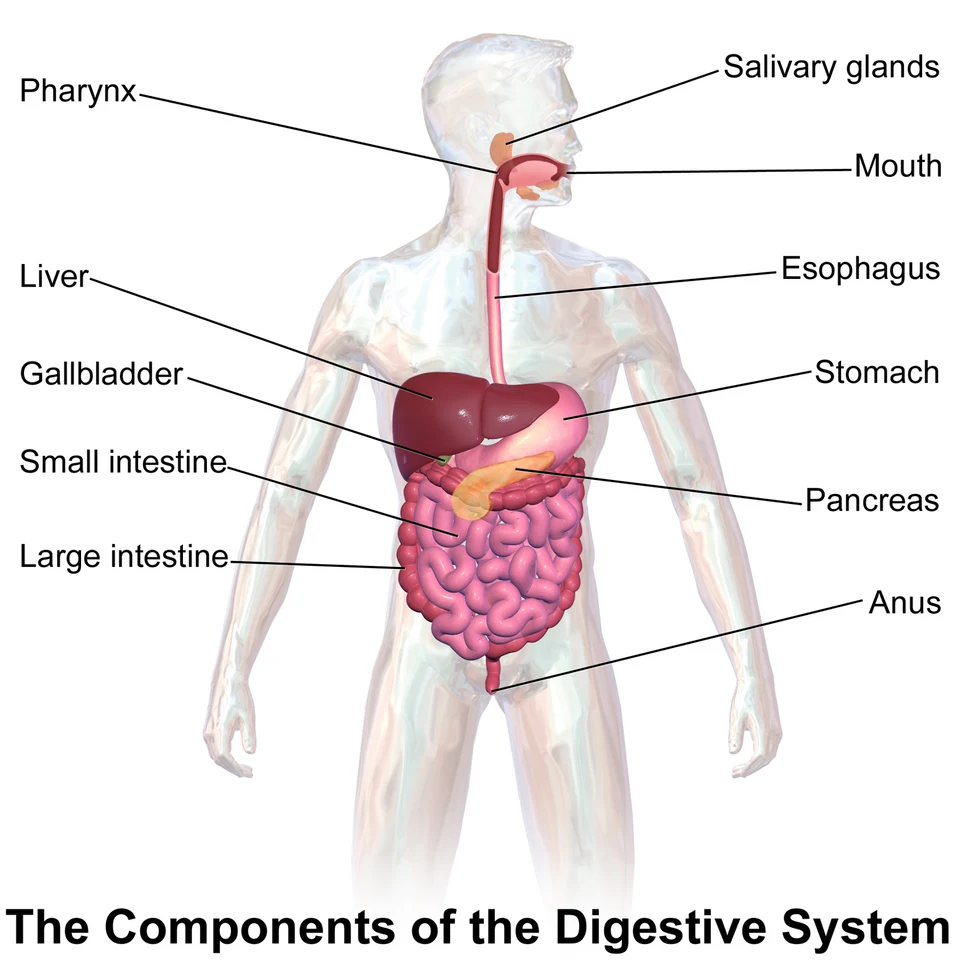
The digestive tract and associated organs: follow the route from the mouth to the intestine.
An educational schematic, not a patient result or a personalized treatment plan. Original labels may be in another language.
Open larger image ↗Source & licence
Blausen.com staff (2014), Medical gallery of Blausen Medical 2014, WikiJournal of Medicine 1(2), doi:10.15347/wjm/2014.010
Blausen 0316 DigestiveSystem.png · CC BY 3.0
Simplified educational image; not to scale.
Not all medicines are tablets
Weight-loss medicines work differently: some reduce fat absorption, while others affect appetite and fullness. Some medicines acting on GLP-1 or GLP-1/GIP pathways are injectable. A similar active ingredient does not mean the same dose, approved indication or interchangeability between products.
Approval and side effects depend on the product
A product approved for diabetes is not necessarily approved in the same form and dose for obesity. Approvals differ between countries. Nausea, bowel changes and other side effects depend on the medicine. Medical history and contraindications need review before starting. Do not change doses yourself or combine weight-loss medicines without medical advice.
Pregnancy and supplements
Weight-loss medicines are unsuitable during pregnancy. If pregnant, planning pregnancy or breastfeeding, discuss starting or continuing treatment with your doctor; the time needed before stopping depends on the medicine. A 'herbal' label or social media sales do not prove safety or effectiveness. Unknown ingredients can cause harm or interactions.
How is treatment monitored?
Follow-up reviews weight response, associated conditions, tolerance and the cost of continuing treatment. Obesity often requires long-term management, and weight may increase after medication stops. Have a plan for continuing, changing or stopping treatment. No product guarantees weight loss without side effects.
This article provides general information. Treatment and nutrition plans must fit your procedure, associated conditions and individual circumstances.
Sources and article history
Adapted and rewritten from an older article. Absolute claims, outdated prices and advice needing correction have not been republished unchanged.