
Aftercare
Care during weeks 5–10 after bariatric surgery
Food variety and activity usually increase, but progress should match the operation, food tolerance and the care team's plan.
Educational adaptation of an article from the previous website • Content updated: 27 September 2026
Gradually increasing food variety
Reaching week five does not automatically mean all foods are allowed. If your team approves, gradually increase texture and variety. Small meals, slow eating, thorough chewing and stopping when full can help. Try new foods one at a time and record tolerance.

Recovery and sustainable daily activity
AI-created conceptual artwork; not a patient result or an exact surgical diagram.
Explore the educational diagram and sources
Educational illustration
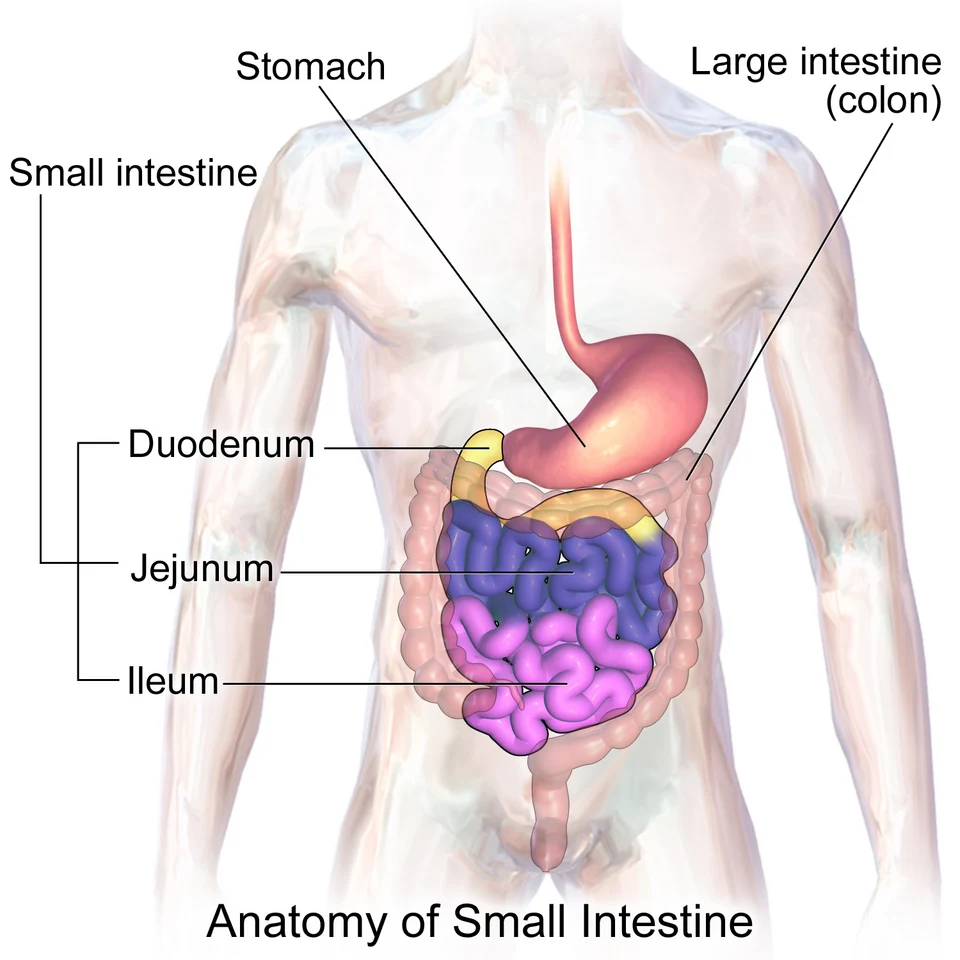
Duodenum, jejunum and ileum: the three parts of the small intestine.
An educational schematic, not a patient result or a personalized treatment plan. Original labels may be in another language.
Open larger image ↗Source & licence
Blausen.com staff (2014), Medical gallery of Blausen Medical 2014, WikiJournal of Medicine 1(2), doi:10.15347/wjm/2014.010
Blausen 0817 SmallIntestine Anatomy.png · CC BY 3.0
Simplified educational image; not to scale.
Protein, fluids and supplements
Many postoperative plans aim for about 60–100 grams of protein daily. Your dietitian should set your individual target, particularly if you have kidney disease or other special circumstances. Drink fluids gradually according to your plan and continue prescribed supplements. Very low protein intake cannot meet usual postoperative needs.
Activity and returning to work
Walking and light activity usually increase gradually. Strength training, heavy lifting and vigorous exercise require clearance from the surgical team. Your job, healing and possible complications affect return-to-work timing; another person's schedule is not a fixed rule.
Explore the educational diagram and sources
Educational illustration
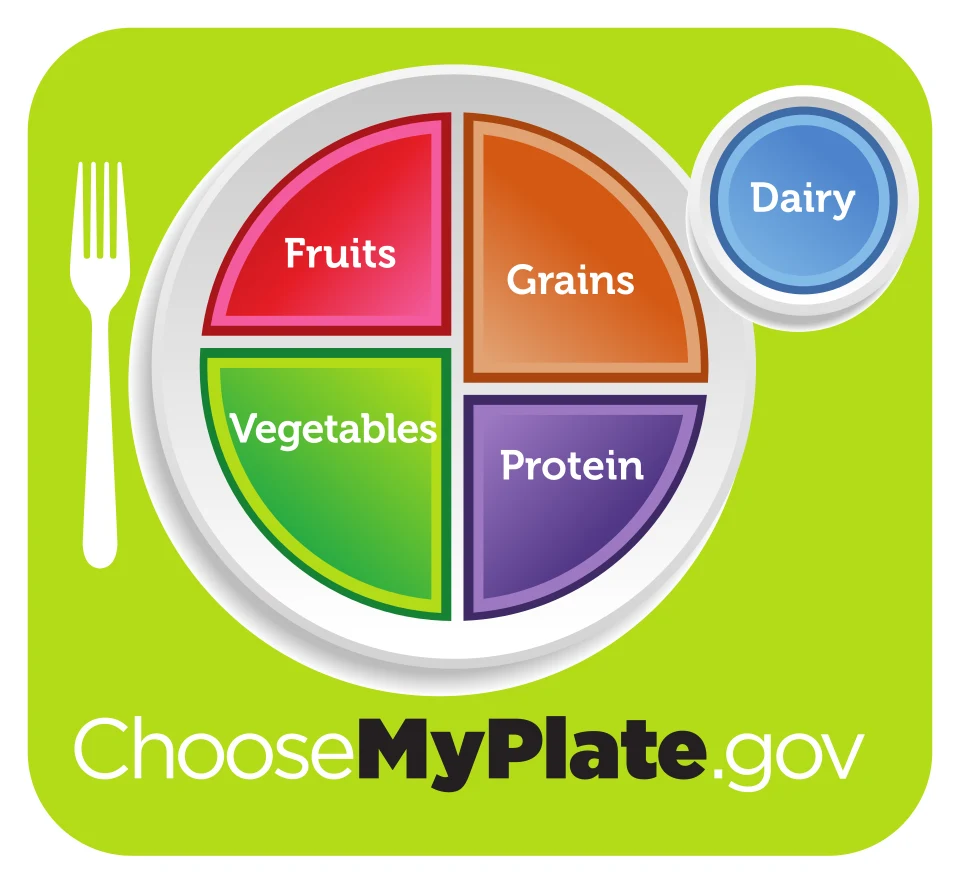
Food groups in the USDA MyPlate educational model. Portions and food texture after surgery require an individual plan.
An educational schematic, not a patient result or a personalized treatment plan. Original labels may be in another language.
Open larger image ↗Source & licence
United States Department of Agriculture
USDA MyPlate green.svg · Public domain
Simplified educational image; not to scale.
Nausea, reflux and hair shedding
Do not attribute repeated nausea or vomiting only to eating too fast. Persistent reflux or difficulty swallowing needs assessment. Temporary hair shedding can follow rapid weight loss, but protein, iron or other nutrient deficiencies may also need evaluation. No supplement guarantees prevention of hair loss.
When should you contact the team?
Inability to keep fluids down, repeated vomiting, reduced urine or significant dizziness warrant prompt contact. Severe abdominal pain, fever, breathlessness, fainting or bleeding require emergency assessment. Attend planned visits and tests even if weight loss is going well.
This article provides general information. Treatment and nutrition plans must fit your procedure, associated conditions and individual circumstances.
Sources and article history
Adapted and rewritten from an older article. Absolute claims, outdated prices and advice needing correction have not been republished unchanged.